> For the complete documentation index, see [llms.txt](https://docs.daylite.app/help/llms.txt). Markdown versions of documentation pages are available by appending `.md` to page URLs; this page is available as [Markdown](https://docs.daylite.app/help/learn/getting-started/adding-contacts.md).
# Adding Your Contacts
Your Contacts are at the very centre of your business. Importing your Contacts from other contact management applications should always be a straight forward process. Whether you are importing from Apple's Contacts, iCloud, Google, or any other format, Daylite makes that process easy.
## Importing your Apple Contacts into Daylite
Apple's Contacts application is built right into macOS. It is easy to import People and Companies from Contacts into Daylite, whether you're importing some Contacts, all Contacts, or just a specific group into Daylite.
1. In Daylite, select **File > Import > Import Contacts**.
2. Next, choose **Import from Contacts app.**
{% hint style="info" %}
**Did you know?**
You can also import your Contacts by drag and dropping onto this window, or directly onto the Daylite icon in your Dock.
{% endhint %}
3. During the import process, you can assign specified Categories to your Contacts as you import them. For example, you could choose to assign a Category of Client to the first batch of imports, and Prospect to the next batch. Once these Contacts have been successfully imported, their Category will be updated automatically.
4. Select the Contacts you wish to import and then click the blue **Import Contacts** button.
Congratulations, you have successfully imported your Apple Contacts. Please note that only New Contacts are added. Daylite will update any dupliate Contact records.
## Importing your Google Contacts into Daylite
You can also import Google Contacts into Daylite.
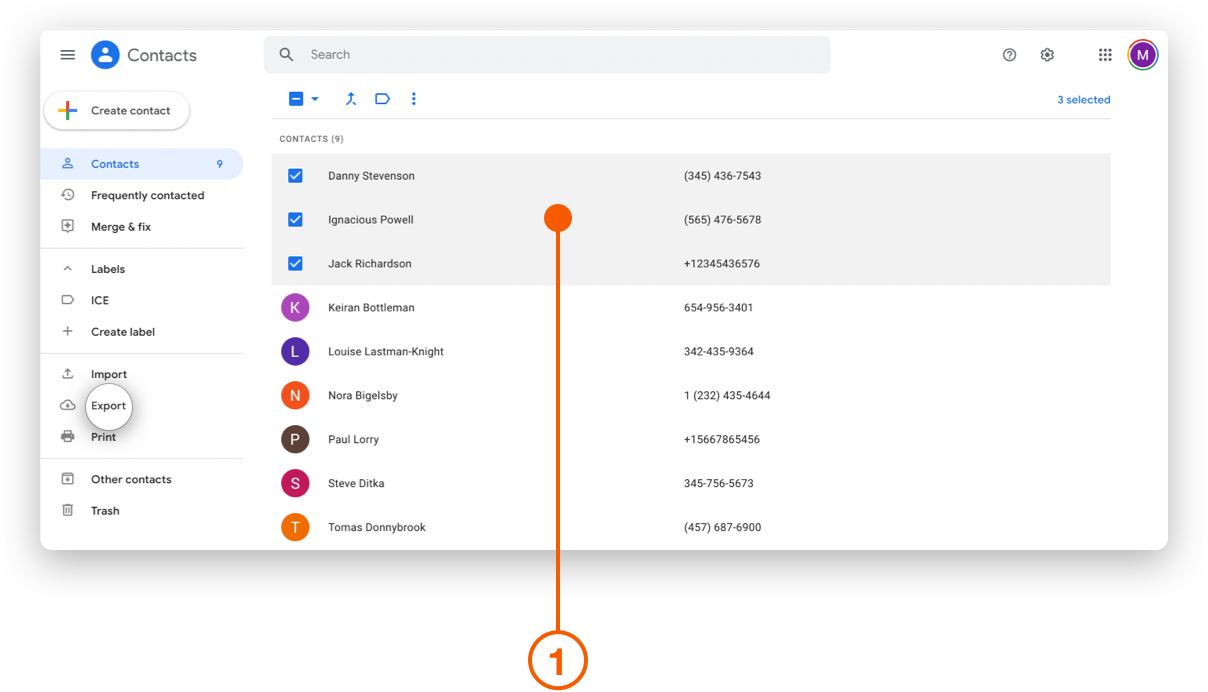
1. Log into [Google Contacts](https://contacts.google.com), select the contacts you want to export and click **Export** on left hand column.
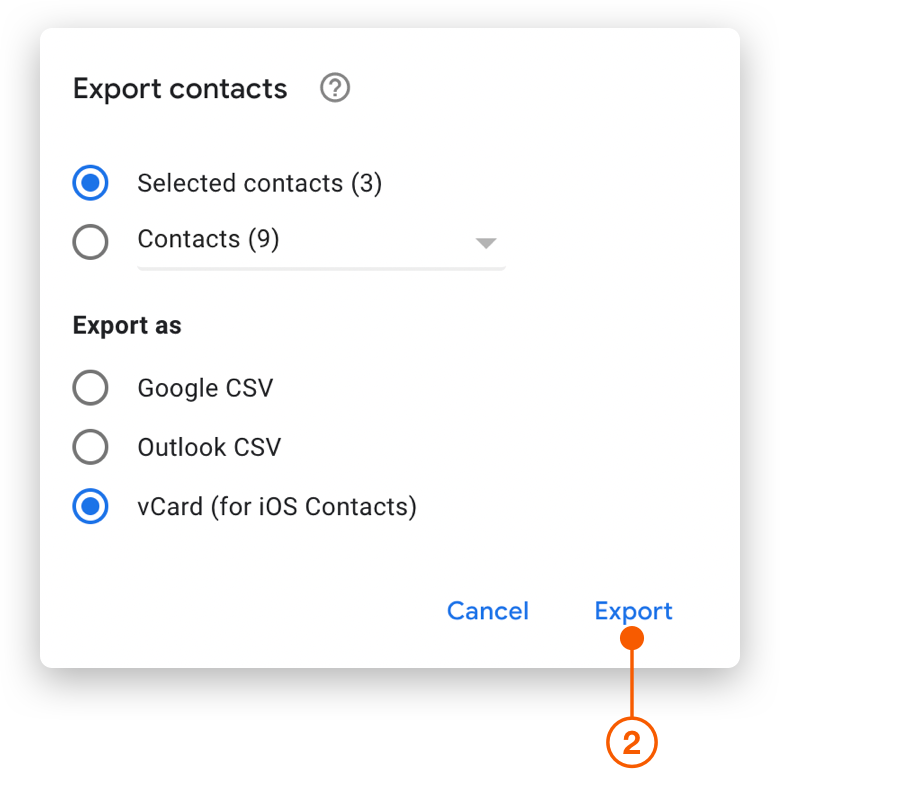
2. Choose **vCard (for iOS Contacts)** and click Export.
3. Open Daylite and choose **File > Import > Import Contacts**.
4. Select **Import vCard** from the list.
5. Navigate to your Downloads folder, select the .vcf file, and click **Open**.
## Importing Other Formats into Daylite
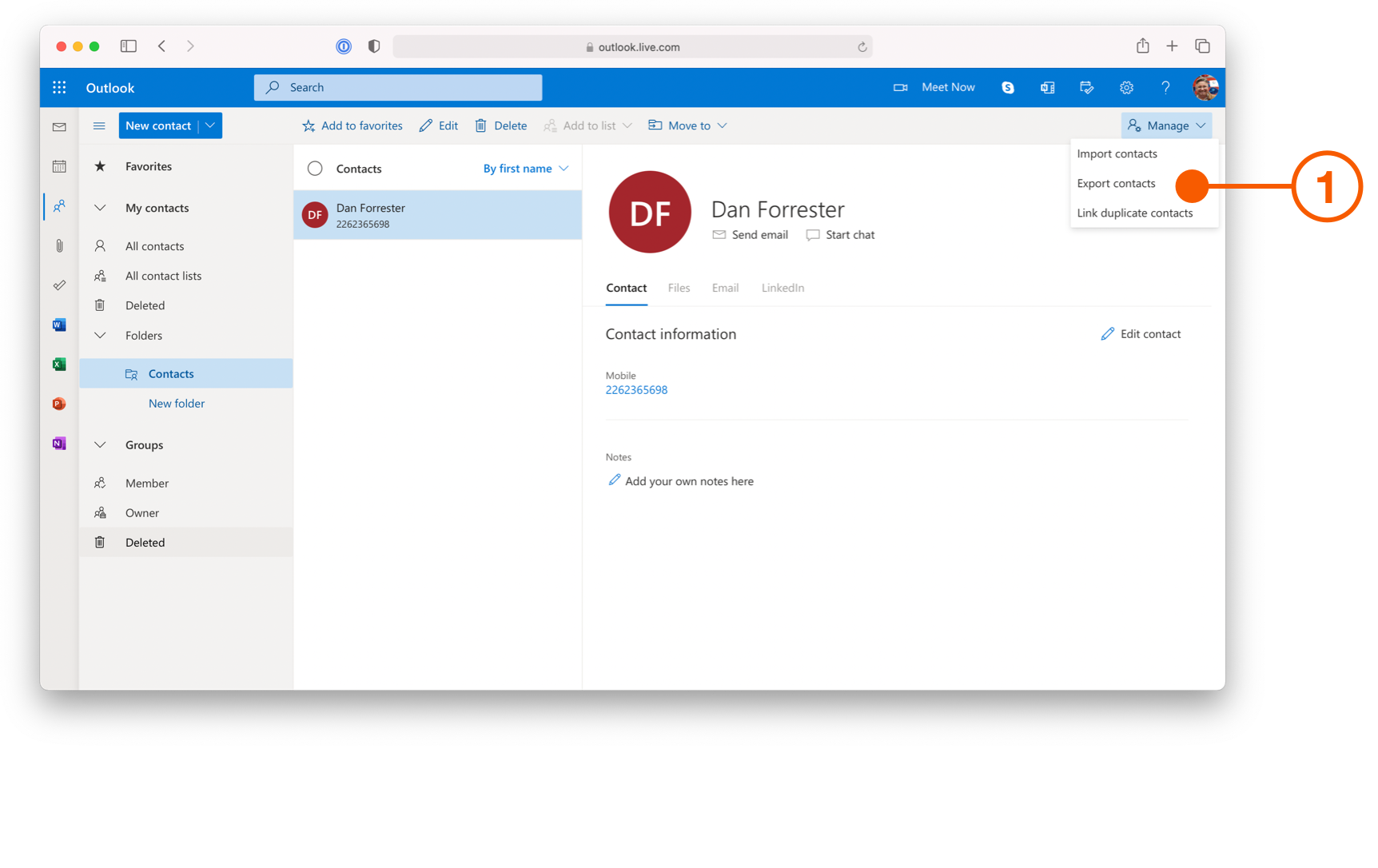
If your contact manager or CRM doesn't support vCard exporting, or you are managing contacts in a spreadsheet, you can still import contacts into Daylite using the **Import from Spreadsheet** option. Microsoft Outlook for example uses a Comma Separated Values format, also known as a .csv format.
1. Open the contact application you are currently using and look for the option to Export.
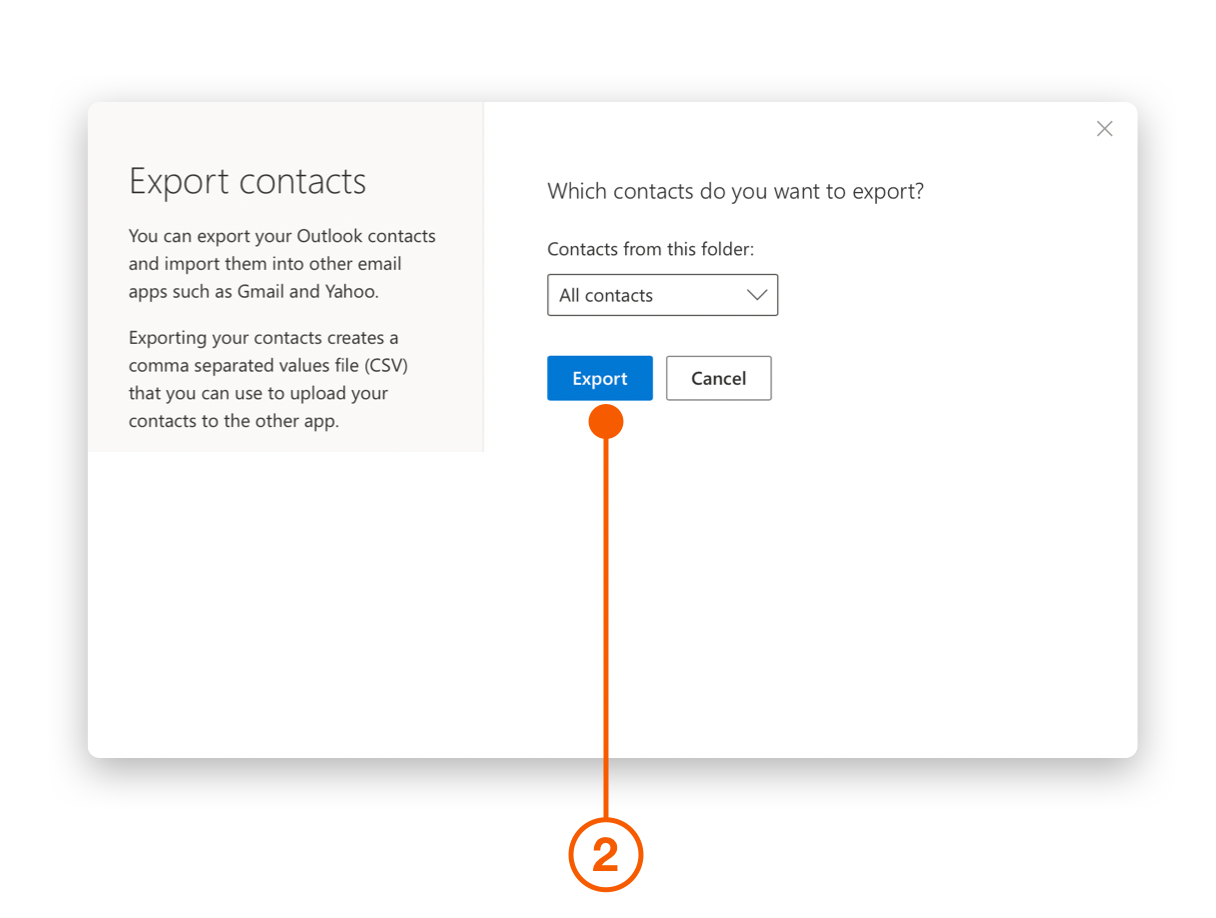
2. Choose the format you wish to export to the Downloads folder. In this example, Microsoft Outlook does not give you an option to choose.
3. Open Daylite and choose **File > Import > Import from Spreadsheet (CSV, TSV)**.
4. Click Browse and navigate to your Downloads folder. Select the file your application uses (.csv in Microsoft Outlook's case) and click **Import**.
{% hint style="success" %}
**Pro Tip:**
If you cannot see the option to export as a vCard, you can contact the developer of the app for assistance, or check to see if you can export contacts from either a .csv format or other delimited text.
{% endhint %}
## Wrap Up
With your Contacts in Daylite, you can start exploring the interface and see how Daylite can take you further. Keep up the momentum and add your [Calendar](/help/learn/getting-started/importing-calendars.md) to Daylite, then start sharing your [Contacts](broken://pages/lQK1kEDYmpdlwxUMW67f) and [Calendar](broken://pages/hXbGppdC92AB2JphRHzx) with other apps.
If you would like help with importing from another major contact manager, CRM, or contacts spreadsheet we'd love to pair you with one of our [Daylite experts.](https://www.marketcircle.com/experts)
---
# Agent Instructions
This documentation is published with GitBook. GitBook is the documentation platform designed so that both humans and AI agents can read, navigate, and reason over technical content effectively. Learn more at gitbook.com.
## Querying This Documentation
If you need additional information that is not directly available in this page, you can query the documentation dynamically by asking a question.
Perform an HTTP GET request on the current page URL with the `ask` query parameter, and the optional `goal` query parameter:
```
GET https://docs.daylite.app/help/learn/getting-started/adding-contacts.md?ask=&goal=
```
`ask` is the immediate question: it should be specific, self-contained, and written in natural language.
`goal` is optional and describes the broader end goal you are ultimately trying to accomplish on behalf of the user. GitBook uses it to tailor the answer towards what is most useful for that goal.
The response will contain a direct answer to the question and relevant excerpts and sources from the documentation.
Use this mechanism when the answer is not explicitly present in the current page, you need clarification or additional context, or you want to retrieve related documentation sections.